
MagneticScreenScale
€945.00
Available, delivery time: 2-5 days
MagneticScreenScale
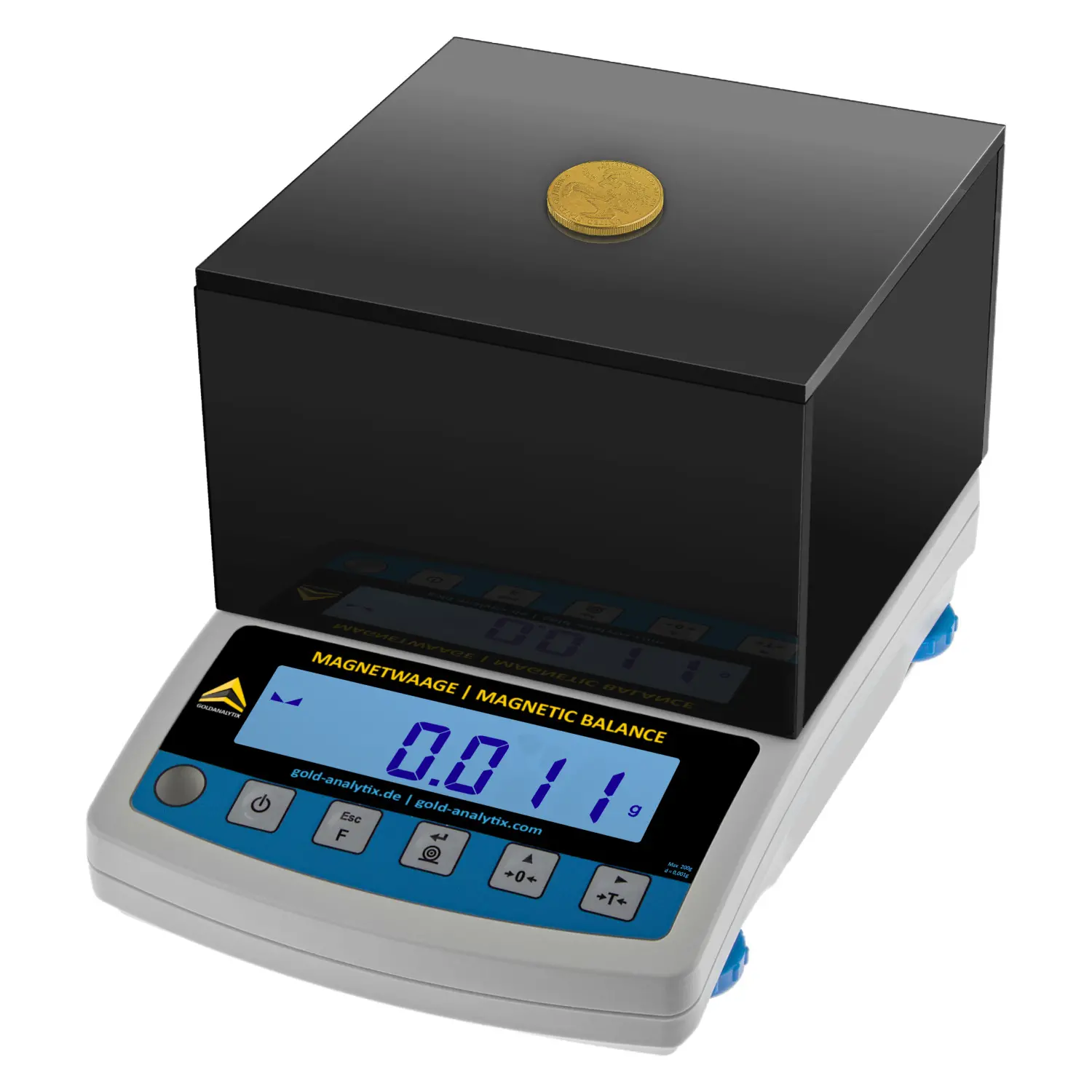
The product features at a glance:
quick authenticity test of gold and silver
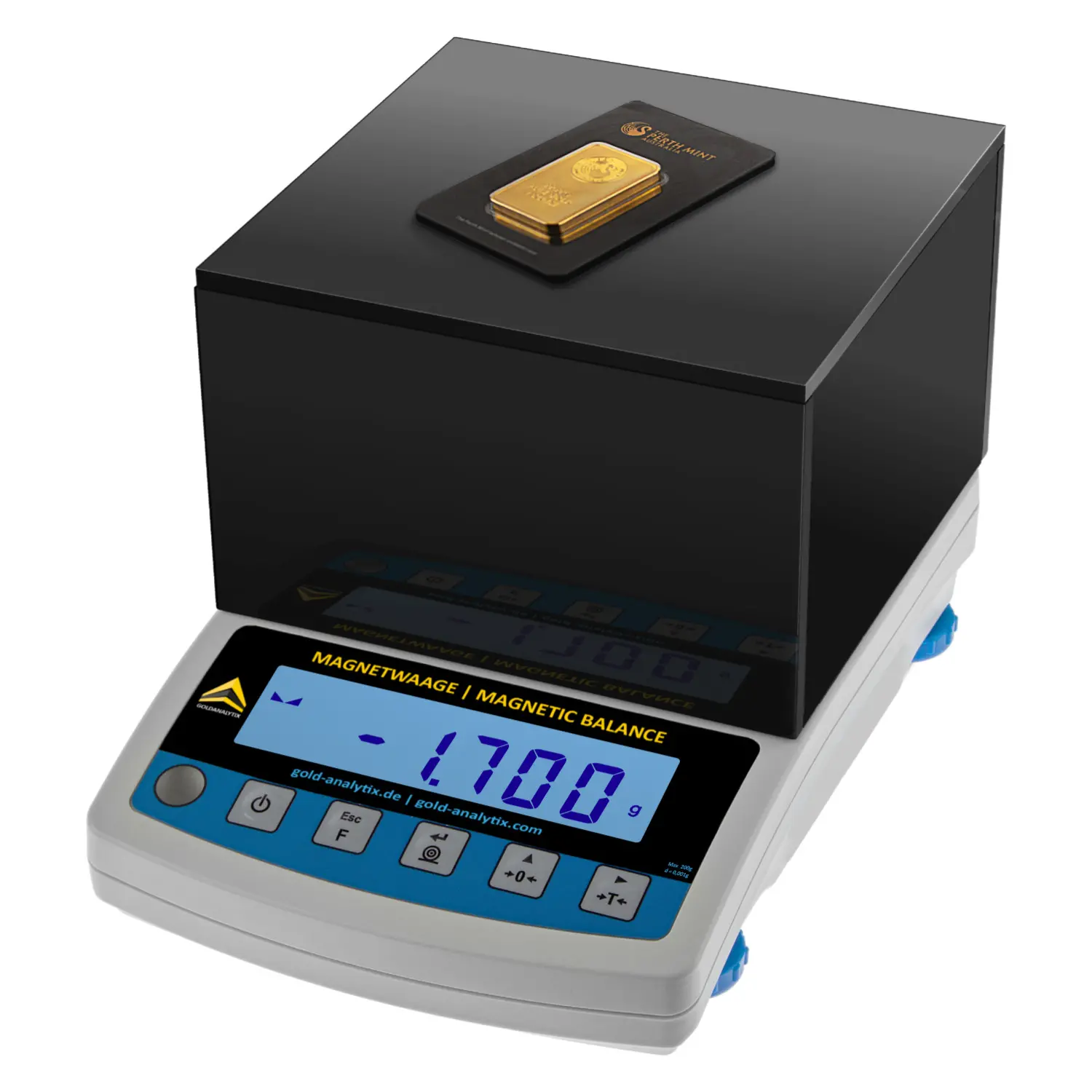
can also measure through capsules, blisters and plastic films
about 3 mm penetration depth into gold and silver
our magnetic scales - the fastest tungsten detector
Measure objects of up to 250 g
Tungsten forgings are dangerous! Tungsten has the same specific density as gold and is therefore the perfect forging material for gold ingots and -coins.
The MagneticScreenScale lets you detect such forgings quickly and with certainty. The scales' strong magnetic field penetrates the ingot's or coin's core deeply without destroying it. Tungsten can be discovered until 3 mm below the golden surface! The biggest advantage of the magnetic scales is that it detects tungsten occlusions in fine gold (99.99 % gold). The information here is always unambiguous and tungsten inclusions are still detected under a gold layer of up to 3 mm with complete reliability. In comparison, an expensive XRF-device can only pervade 0.010 mm into gold. That means that the magnetic scales measure about 300 times more deeply into the metal. That's why the magnetic scales are ideal for testing the authenticity of investment gold (ingots, coins, etc.) in a high troughput. Thanks to its accumulator, the scales can be run in places without mains power and is a perfect assistant when purchasing investment gold.
But also many kinds of forging silver, as well as forgings of platinum or palladium can be discovered. Particularly convenient: the testing samples don't need to be taken out of its plastic blisters, plastic films or capsules (when they are not extraordinarily thick). That means that also small investment ingots that are firmly welded can be examined fast and with high certainty. Even jewellery can be tested regarding the often used tungsten carbide cores. You'll obtain the magnetic scales in a noble and robust aluminium carry case. Purchase the original from us - the proven and reliable solution to testing gold.
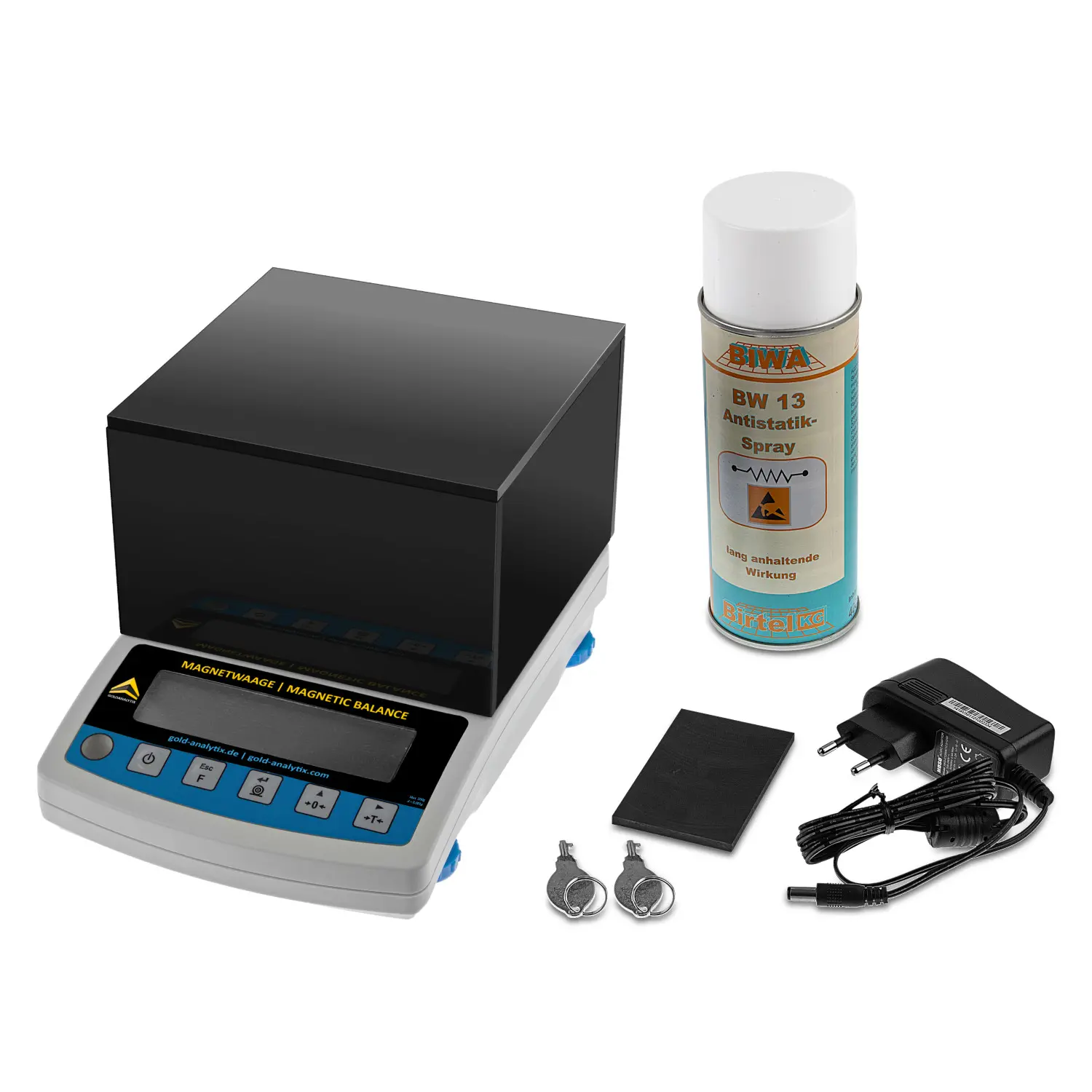
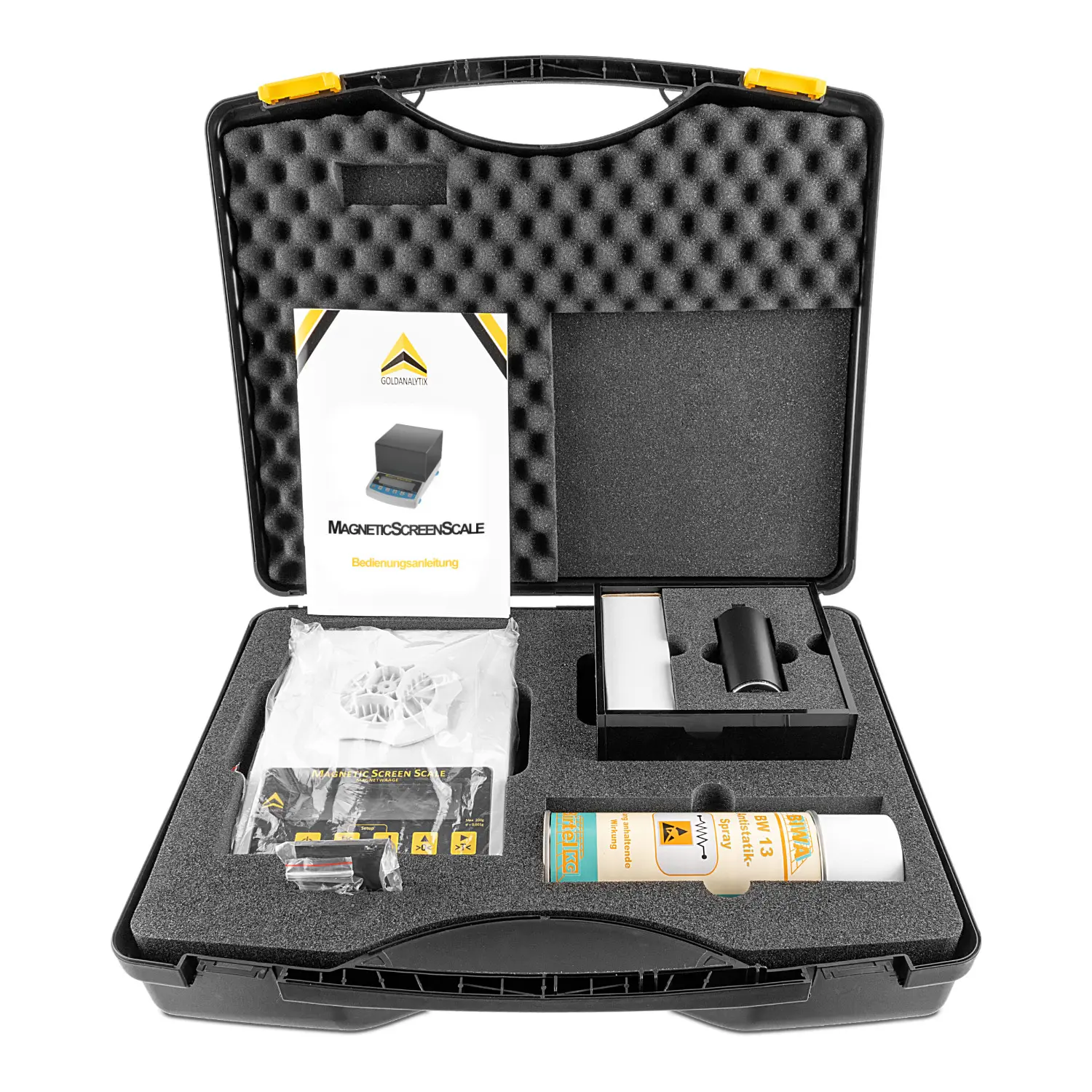
Scope of delivery:
MagneticScreenScale
Instruction manual
Small extra-magnet
Reference-object
Anti-static spray
Delivery in handy aluminium case
Application information:
Manufacturer / Responsible person for the EU:
MARAWE GmbH & Co. KGAn d. Irler Höhe 3B
93055 Regensburg, Deutschland
+49 941 29020439
info@marawe.de
Login
Reviews are not verified as to the authenticity of purchases. Reviews may be from consumers who have not purchased or used the products.
Under certain circumstances, a counterfeit item may yield a positive—that is, diamagnetic—result on a magnetic scale if the foreign core is hidden too deep inside and the paramagnetic “fake core” is therefore not detected due to the diamagnetic layer. The maximum thickness of a gold layer through which a measurement can be taken is approximately 2.5 mm. Similarly, a coating made of a strongly diamagnetic material that produces a strongly positive value (e.g., bismuth) can, so to speak, offset the paramagnetic core located further inside (which, of course, yields a negative value) and thus skew the reading toward “+.” However, such counterfeits would be difficult to produce, would require a relatively thick layer of, for example, bismuth, and would therefore be detected by a weight or density test.
There are many different alloys used in jewellery, containing a wide variety of metals. Because the magnetic scale measures with such high precision, even a small amount of a ferromagnetic or paramagnetic metal (e.g., nickel, platinum) can influence the result, rendering it unreliable. For this reason, the magnetic scale is generally not suitable for testing jewellery. For jewellery testing, we recommend the CaratScreenPen. It allows you to determine the fineness of gold (karat) in jewellery and other gold-containing objects in just a few seconds.
Yes and no. In theory, a magnet can be used to determine whether an object exhibits diamagnetism or paramagnetism. However, the magnetic forces produced by conventional magnets are often so weak that they cannot be detected by the human eye. To take a measurement, you would therefore need a very strong magnet. For this reason, a magnetic balance capable of measuring down to the hundredths of a gram is recommended. This allows you to detect even very subtle differences and obtain clear results.
Be sure to handle the magnet with care, as it can otherwise cause injury.
Keep electronic devices away from the magnet, as they may be damaged.
Electrostatic charge can distort the measurement results, so be sure to discharge any static electricity from the packaging or the Plexiglas assembly using the antistatic spray.
First, use the included bar magnet to check the objects for ferromagnetic materials or contaminants; otherwise, the scale may be damaged or the results may be inaccurate. This is how you can accurately detect counterfeits with the MagneticScreenScale.
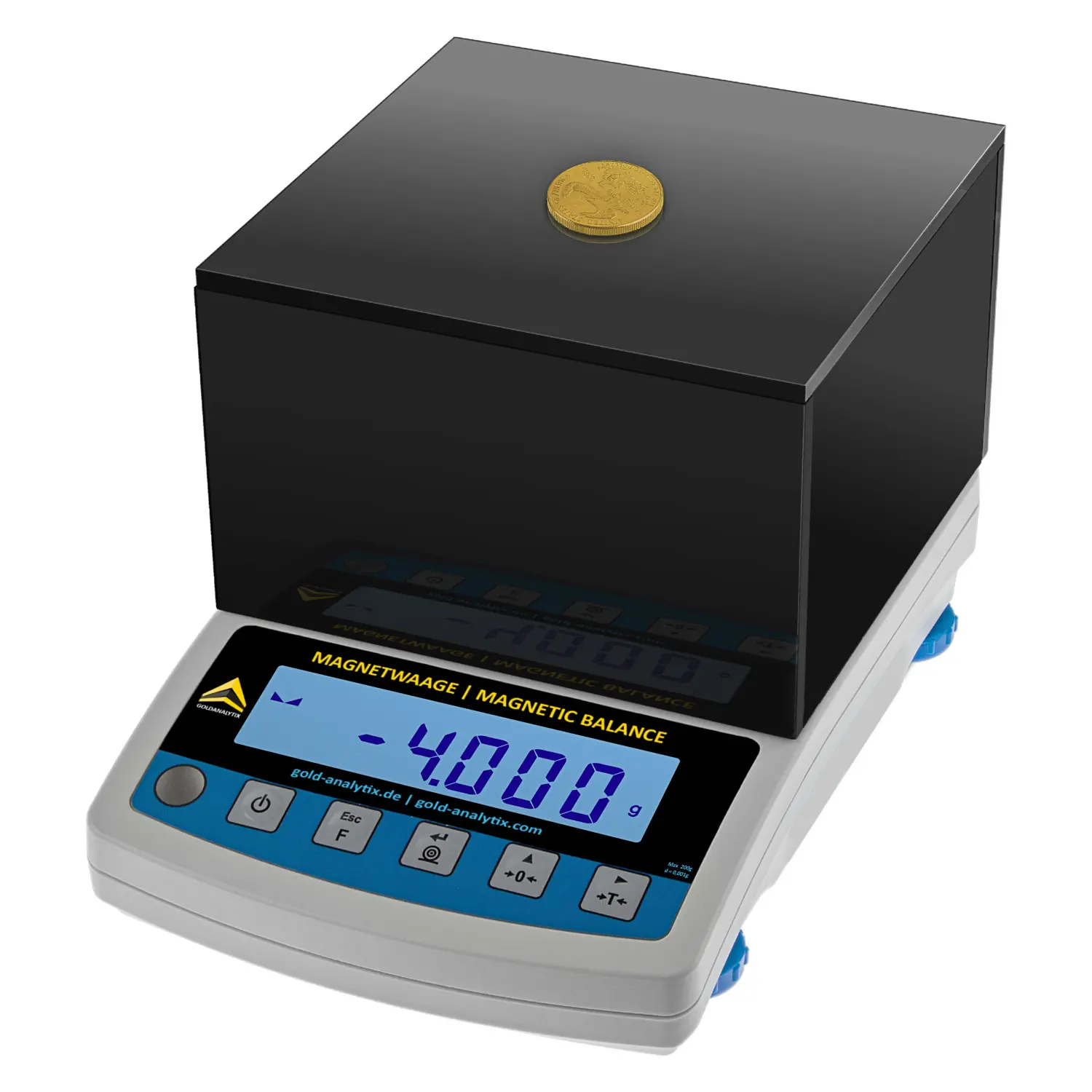
If the magnetic scale returns a positive result, the material in question is diamagnetic.
If the result is slightly negative, it is paramagnetic; if the result is strongly negative, the object is likely ferromagnetic.
In most cases, a negative result means that the test piece is not a pure precious metal. However, there are some exceptions to consider: for example, older Krugerrand coins.
No, the magnetic scale cannot be used to draw conclusions about precious metal alloys, since the differences are far too small. It is only possible to determine whether the test specimens are made of counterfeit material.
There are many different alloys used in jewellery, containing a wide variety of metals. Because the magnetic scale measures with such high precision, even a small amount of a ferromagnetic or paramagnetic metal (e.g., nickel, platinum) can influence the result, rendering it unreliable. For this reason, the magnetic scale is generally not suitable for testing jewellery. For jewellery testing, we recommend the CaratScreenPen. It allows you to determine the fineness of gold (karat) in jewellery and other gold-containing objects in just a few seconds.
The magnet of the MagneticScreenScale is a strong neodymium magnet that must be handled with care. On the one hand, electronic devices and objects with magnetic storage (hard disks, credit cards) should be kept away from the magnet, otherwise they can be damaged. Secondly, you should keep it away from other strong magnets to avoid bruising, splintering or sparks.
People with pacemakers should also keep a sufficient distance from this magnet.
Information sheet: "Safe handling of magnets"
Similar Products
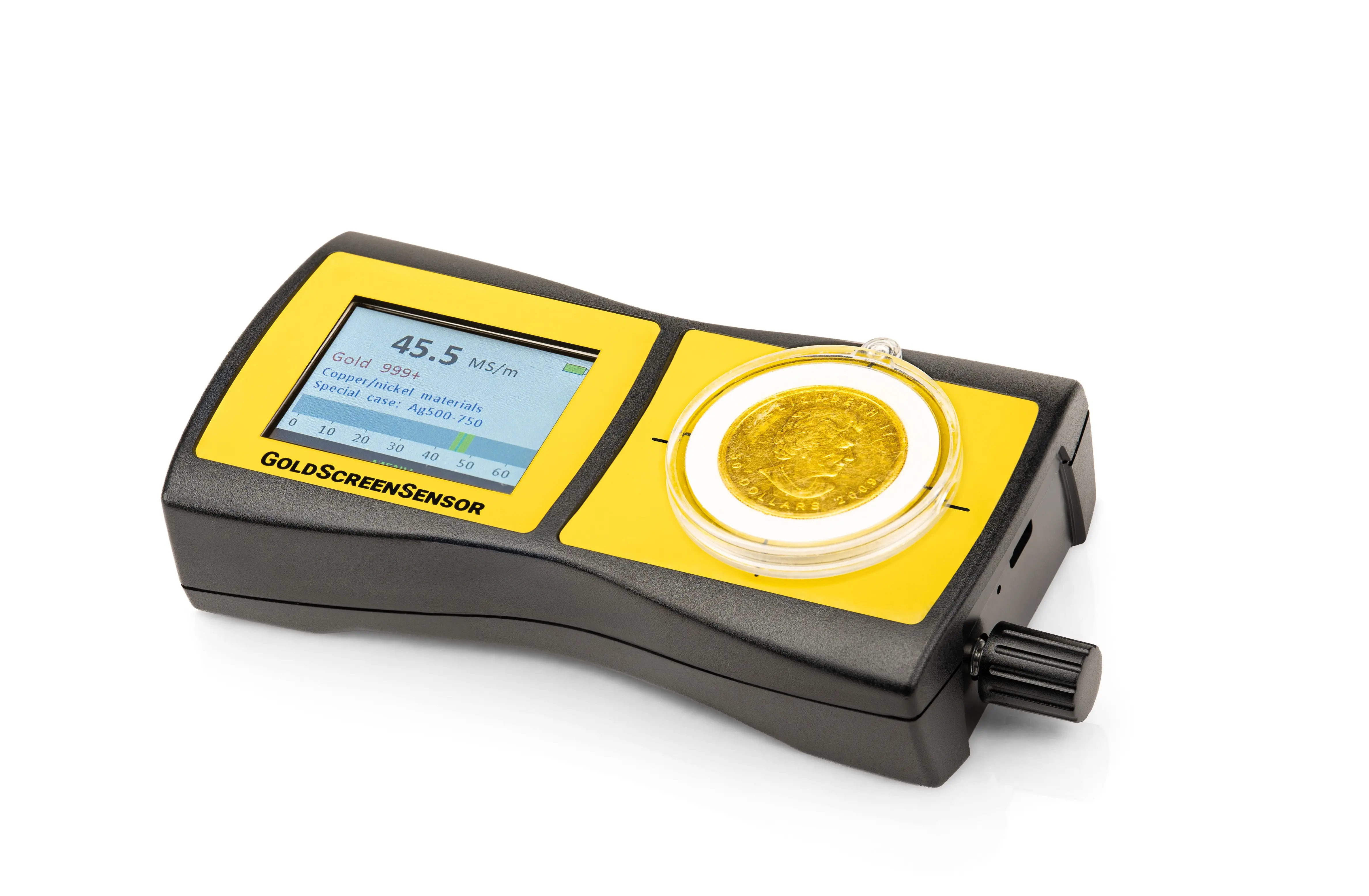
Precious metal testing device for verifying the authenticity of coins and ingots
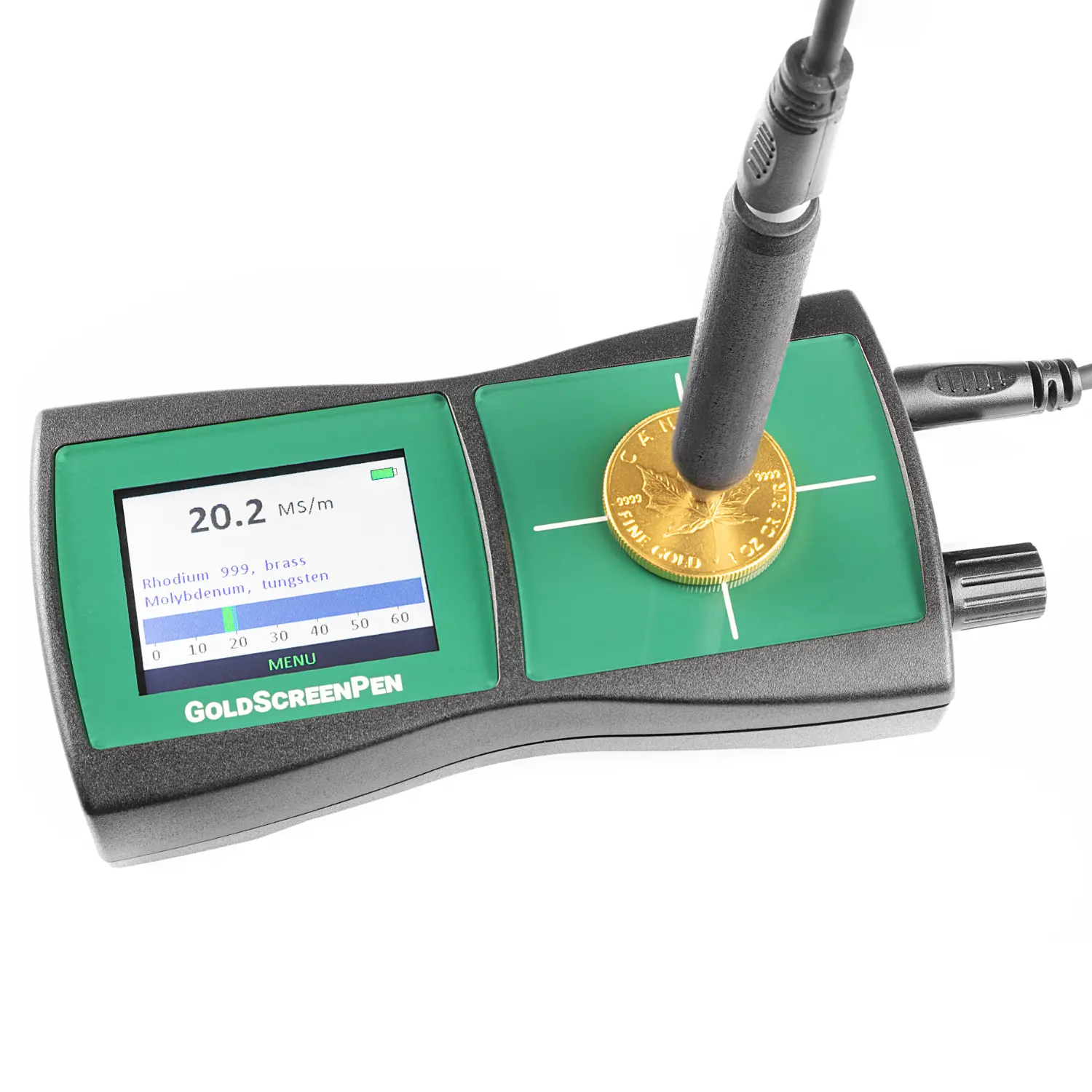
Testing device for authenticity testing of gold, silver and other (precious) metals